
How the Middle East Is Modernizing Security
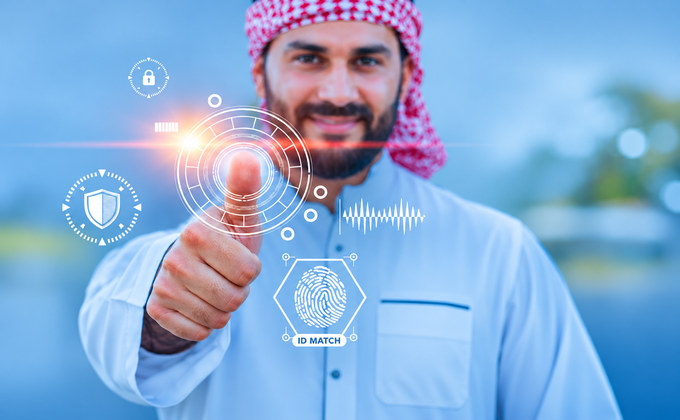
Across the Middle East, access control is evolving into a broader identity strategy. Mobile credentials, biometrics, cloud platforms, AI, and edge intelligence are helping organizations modernize security while extending the value of existing infrastructure
By: Jim Dearing, VP of Product Management, PACS, HID
E-mail: pacsmeamarketing@hidglobal.com
As governments and organizations across the Middle East accelerate investments in smart cities, digital services and critical infrastructure, identity is emerging as the foundation for securing how people access buildings, devices and digital resources.
This shift is driving significant growth in the region’s access control market, which was recently valued at $595 million, fueled by rapid urbanization, evolving security priorities, and the adoption of IoT-enabled technologies. At the same time, governments are introducing new requirements and standards to strengthen security. In the UAE, for example, the UAE Fire and Life Safety Code of Practice requires advanced access control systems in new commercial buildings, reinforcing the need for integrated, future-ready security infrastructure.
While organizations are modernizing at different speeds, several trends are reshaping long-term strategies: mobile credentials, converged physical and digital identity, cloud-enabled access control and the growing use of biometrics. Together, these developments point toward a common objective: a unified approach to identity across physical and digital environments.
Identity Becomes the Foundation for Modern Access
One of the most significant changes underway is the convergence of physical and logical access. Historically, these systems have been managed separately. Employees might use a badge to enter a building, passwords to access workstations and additional credentials for applications, creating complexity and management overhead. HID’s 2026 State of Security and Identity Report found that 73% of respondents identified identity management as their top strategic trend, while 75% had already deployed or were evaluating converged physical and digital identity solutions.
For organizations across the Middle East, where digital transformation programs continue to accelerate, a unified approach to identity offers a practical path forward. A single trusted credential can simplify provisioning and revocation, improve visibility into access activity and strengthen security through more phishing-resistant authentication methods. Rather than viewing identity as a function of access control, organizations are increasingly treating access control as one component of a broader identity strategy.
Mobile Access Without Disruption
Mobile credentials have emerged as one of the most practical ways to modernize identity management as they give organizations far greater control over credential lifecycles while providing users with a more seamless experience. However, many organizations still assume that adopting mobile credentials requires replacing existing reader infrastructure. For enterprises managing hundreds or thousands of doors, that perception can make modernization appear costly and disruptive.
Rather than viewing identity as a function of access control, organizations are increasingly treating access control as one component of a broader identity strategy
Many readers installed since 2020 were designed with the hardware capabilities required to support mobile credentials, including NFC and Bluetooth communications. As a result, organizations can often enable new functionality through firmware updates or configuration changes rather than replacing existing reader infrastructure. This allows mobile credential support to be introduced with significantly less cost and disruption while extending the value of existing investments.
Biometrics Gain Momentum
Biometric authentication is also becoming a more prominent part of modern access strategies. Traditionally deployed in high-security environments such as data centers and research facilities, biometrics are increasingly viewed as another trusted expression of identity. HID’s research found that 45% of respondents see biometrics as a strategic priority, with 34% having already deployed them and 23% planning implementation.
The Middle East has been particularly receptive to biometric technologies. Across multiple sectors, organizations are embracing fingerprint and facial recognition solutions to improve security, reduce dependence on physical credentials and create frictionless user experiences. Many view biometrics as an intuitive and convenient form of authentication because users always carry their credential with them.
Intelligence at the Edge
Another important development is the growing ability to run custom applications directly on access door controllers. This allows organizations to extend functionality closer to where access decisions occur, rather than relying exclusively on centralized systems. By bringing intelligence to the edge, organizations can respond more quickly to events, reduce system complexity, and enable tighter integration between access control, building management systems, and other operational technologies.
This capability is particularly relevant as smart city initiatives continue to expand throughout the region. More than $120 billion has been invested in future urban development projects across the Middle East, many of which depend on highly connected digital infrastructure and integrated security systems. As these environments generate increasing volumes of data, organizations are looking to artificial intelligence and automation to deliver real-time insights and faster decision-making. Running applications and analytics closer to where data is generated helps organizations respond faster, reduce latency and lessen dependence on centralized processing. The market for AI-driven security solutions is projected to reach USD 600 million, reflecting increasing demand for real-time monitoring, predictive analytics, and operational intelligence. Reinforcing this trend, a recent study of more than 7,300 security professionals worldwide found that AI ranked alongside access control and video surveillance among the key priorities for the future.
Planning for the Future
For many organizations, the next phase of modernization will not be defined by any single technology. Mobile credentials, biometrics, cloud platforms, AI and edge intelligence all play important roles, but their real value comes from their ability to strengthen and extend a unified identity strategy.
Organizations that view identity as the foundation of their security architecture will be better positioned to adapt as technologies and requirements evolve. As the Middle East continues its ambitious digital transformation journey, the most successful organizations will be those that build flexible, interoperable identity platforms capable of connecting people, places and systems through a single trusted framework.