
Dubai tests off-airport security screening
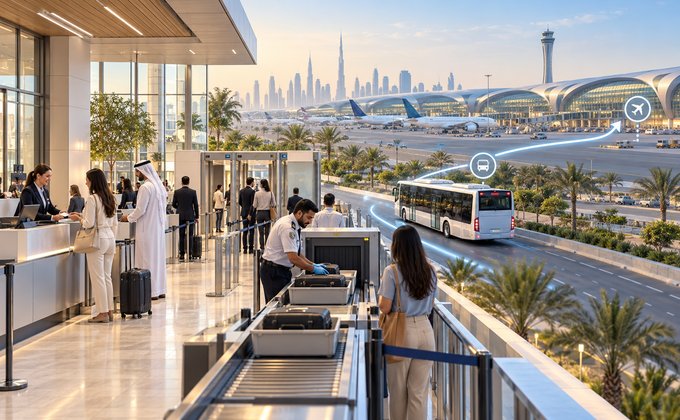
Dubai Aviation Engineering Projects (DAEP) has presented the results of a City Terminal pilot that allows passengers to complete security screening and passport control outside the airport.
The trial reduced passenger journey times by approximately 60%, according to the Emirates News Agency (WAM). DAEP presented the findings at the 13th Global Airport Leaders’ Forum, held alongside Airport Show 2026 in Dubai. The pilot reduced the overall passenger journey from at least 120 minutes to approximately 45 minutes.
Security screening moves beyond airport terminals
The City Terminal concept allows passengers to complete several airport procedures at locations within the city. These include check-in, baggage drop-off, security screening and passport control. After completing these procedures, passengers travel to the airport concourse in secure vehicles.
The approach extends beyond conventional city check-in services by relocating security and immigration procedures outside traditional airport facilities.
Abdullah Al Shamsi, Senior Manager of Future of Things at DAEP, explained the pilot’s scope: “The trial included check-in, baggage drop-off, security screening and passport control outside the airport, followed by the transfer of passengers in secure vehicles directly to the airport concourse, going beyond the traditional concept of city check-in facilities.” He said the results demonstrated how airports could fundamentally redesign passenger processing.
Biometrics and AI shape future airport operations
The pilot forms part of DAEP’s broader vision for airport innovation by 2032. That vision includes artificial intelligence, digital identity, biometrics and real-time data analytics. These technologies could help airports anticipate congestion, optimize resources and deliver more personalized passenger services.
Meanwhile, Majed Al Joker, Chief Operating Officer of Dubai Airports, emphasized collaboration, operational resilience and innovation. He said effective responses to airport disruptions depend on coordination, established relationships and clear leadership.
Al Joker also highlighted the role of intelligent systems in anticipating operational challenges before they affect passengers. Dubai’s City Terminal trial demonstrates a potential alternative to traditional airport processing. However, the WAM report did not provide a timeline for wider deployment.