
Smart Cities Market to Reach $1.8 Trillion by 2032
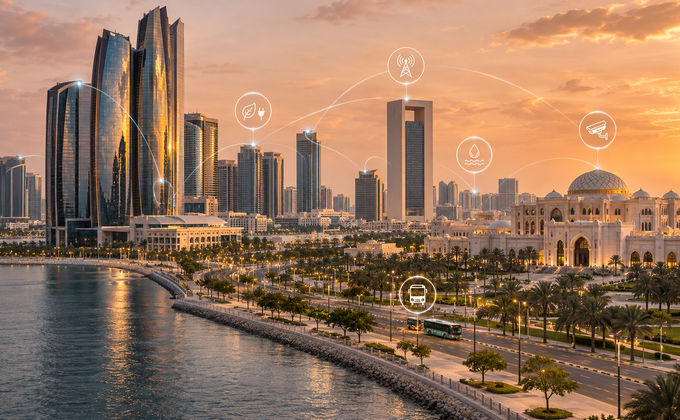
The global smart cities market is projected to grow from $806.32 billion in 2026 to $1,796.22 billion by 2032. New technology partnerships in Abu Dhabi and Riyadh highlight the role of the Middle East in developing connected urban infrastructure.
The global smart cities market will expand at a compound annual growth rate (CAGR) of 14.3% through 2032, according to a new MarketsandMarkets report. Rapid urbanization, climate resilience priorities, and growing demand for digital public services are supporting market growth.
Governments and municipalities are investing in intelligent transportation, energy-efficient buildings, connected utilities, and public safety systems. Artificial intelligence (AI), the Internet of Things (IoT), 5G connectivity, cloud platforms, and digital twins are among the technologies supporting these developments.
Smart Cities Market Forecast
MarketsandMarkets projects the global market to reach $1,796.22 billion by 2032, up from $806.32 billion in 2026, representing a CAGR of 14.3%.
Smart City Projects in the UAE and Saudi Arabia
The MarketsandMarkets research highlights recent developments in two major Gulf markets. In October 2026, Siemens partnered with Abu Dhabi’s Department of Municipalities and Transport to advance digital infrastructure and intelligent mobility.
The report also identifies Huawei’s collaboration with King Abdullah Financial District in Riyadh. The partnership targets next-generation connectivity and AI-powered city services. The report includes the Middle East and Africa in its regional analysis, with separate coverage of the UAE and Saudi Arabia. However, the publicly available findings do not provide individual market forecasts for these countries.
Public Safety and Smart Buildings Drive Demand
Smart citizen services are expected to hold the largest market share during the forecast period. This segment covers public safety, healthcare, education, smart lighting, and electronic government services. Cities are adopting connected infrastructure to improve public services and coordinate operations. Integrated platforms support real-time monitoring, automated processes, and data-driven urban management.
Meanwhile, commercial buildings are projected to account for the largest share of the smart buildings segment. These properties increasingly use automated building management systems to control heating, ventilation, air conditioning, and lighting.
Smart visitor management and access control systems also strengthen building security and simplify entry procedures. In addition, IoT sensors provide environmental data that supports facility management and maintenance.
In transportation, passenger information management is expected to record the fastest growth among smart transportation solutions. These systems use real-time data, connected platforms, and digital signage to provide information about routes, schedules, and delays.
Cybersecurity and Implementation Challenges
Despite expanding investment, privacy and cybersecurity remain significant concerns. MarketsandMarkets identifies the extensive use of connected devices and centralized data access points as important security challenges for smart city ecosystems.
High implementation costs and insufficient infrastructure in some emerging economies also constrain adoption. The report additionally highlights regulatory challenges, data ownership, interoperability, and cross-border data portability.
Meanwhile, Asia Pacific is expected to register the fastest regional growth between 2026 and 2032. The research identifies urbanization, digital infrastructure investment, and government initiatives as major drivers. Leading companies covered in the report include Siemens, Cisco, Hitachi, IBM, Microsoft, Schneider Electric, Huawei, Honeywell, NEC, and ABB.