
More Secure, Cost-Efficient, and User-Friendly Buildings
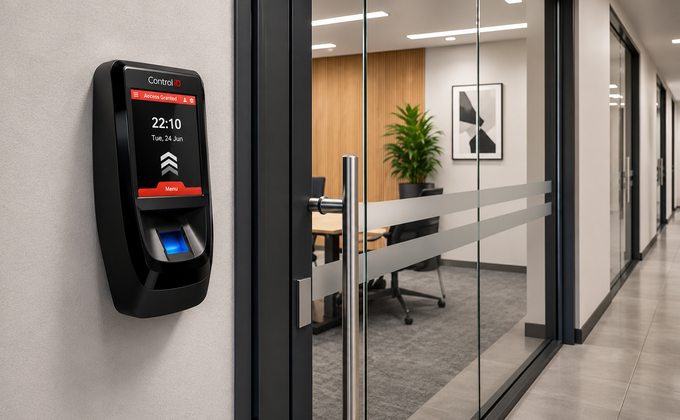
Biometric access has quickly become a serious, scalable option in physical access management. This applies not only in sensitive facilities, but also for many commercial and even multi-residential settings. Biometric solutions offer a powerful, intuitive way to implement authentication anywhere that access must be restricted and monitored
By: Monica O’Malley, Marketing Manager, Middle East, ASSA ABLOY Opening Solutions
E-mail: Monica.Tirthwani@assaabloy.com
Survey data researched exclusively for ASSA ABLOY’s most recent edition of the biennial Wireless Access Control Report shows that a vast majority of professionals (91%) now view biometrics as a useful access and authentication technology. More than half of survey respondents (58%) already deploy the technology to some extent, according to the Report.
This reported enthusiasm is reflected strongly in recent market trends data, both global and regional. According to one analyst, use of biometric access technology is forecasted at 27.1% CAGR through 2033.
Benefits for Users and Security Managers
Biometrics’ burgeoning adoption is easy to understand. Its main benefits are those which are always relevant to facilities and building managers: security, cost, and convenience.
The access security advantages of biometrics are well established. An individual’s biometric traits are unique. No one can share or ‘lose’ their biometric data, unlike a smartcard or smartphone. Biometric credentials do not ‘wear out’ and therefore do not need replacement, like a keycard does. It is near-impossible for biometric credentials to fall into the hands of an unauthorized user. Thus, deploying biometrics as part of a digital access solution enhances the protection of premises. Of course, its security explains why both customers and financial institutions trust biometrics for smartphone banking. According to Apple, for example, the “probability that a random person in the population could… unlock [a device] using Face ID is less than 1 in 1,000,000”.
Replacing cards and fobs with biometrics also saves organizations’ money. With biometrics, they no longer need to issue users with a smartcard or fob. This negates the administrative burden when people inevitably lose or misplace their physical credential.
Because the smartphone has now penetrated almost every corner of daily life, biometrics are familiar to most. People already rely on them to unlock smartphones, for even the most sensitive applications such as banking or health data. Equipping entrances and other key openings with biometric access devices, then, gives building users a frictionless, familiar experience. Staff entry is streamlined – without keys, cards, or badges – and delays are minimized. The handling of a building’s one-off visitors and fixed-term contractors is also simplified. Equally importantly for some workplaces, biometric identification can be hygienic and contactless.
By combining face, RFID, passcode, and/or QR-based entry in one device, the iDFace Reader simplifies implementing two-factor authentication. Cost-effective and easy to install, it can authenticate up to 30,000 different faces with inbuilt liveness protection
Award-Winning Biometric Access Solutions
“Our suite of connected Digital Access Solutions includes versatile biometric devices from Control iD,” says Carlos Garcia, Sales Director at ASSA ABLOY Opening Solutions Middle East. “Deploying these as part of a connected access solution can help organizations to deliver biometrics both effectively and cost-efficiently. They keep premises safe and ensure employee workflows are streamlined.”
“Named Biometric Product of the Year at the Kings Excellence Awards, the iDFace Reader refutes any perception that biometrics must be a niche or high-end technology,” he adds.
By combining face, RFID, passcode, and/or QR-based entry in one device, the iDFace Reader simplifies implementing two-factor authentication (2FA) to increase security at a main entrance or separate sensitive areas within a building. Cost-effective and easy to install, it can authenticate up to 30,000 different faces with inbuilt liveness protection.
Detecting 100,000 Different Faces
The flagship iDFace Max Reader can detect up to 100,000 different faces in demanding high-traffic and low-light environments, including outdoors (IP65). Its capacitive display, high-quality speaker, and metallic body together streamline usage and ensure long-term durability. The iDFace Max Reader also supports the Open Supervised Device Protocol (OSDP) and offers optional Power-over-Ethernet (PoE).
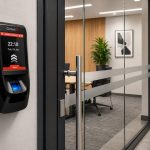
Control iD’s dedicated fingerprint reader, the iDAccess Pro Reader brings reliable, convenient control and 2FA, via RFID and/or passcode. Its high-performance optics can identify up to 100,000 different fingerprints, with fast access powered by a 1.2 GHz quad-core processor.
For projects where space is limited but security requirements remain high, the iDAccess Nano Reader offers a compact and versatile biometric access solution. Its modern, space-saving design enables installation in a wide range of environments while delivering powerful performance. Equipped with a 1.2 GHz quad-core processor, the device can identify up to 100,000 fingerprints in standalone mode.
“All devices can operate as standalone solutions for a single door, if this is all a customer needs” says Carlos Garcia. “They also integrate seamlessly with a growing range of new and existing access management solutions, including our own ASSA ABLOY Primo. In this way, our biometric readers can play an important role in scaling the connectivity and intelligence of a building management system – a critical node in any organization’s digitalization strategy.”
Learn more about biometric access solutions from ASSA ABLOY at https://www.assaabloy.com/ae/en/solutions/topics/access-control/control-id.