
HID: Open access control key to long-term data center security
Access control architecture can shape how well data centers adapt over decades of operation.
HID argues that layered physical security is now a baseline requirement, while openness and interoperability are becoming more important for long-term infrastructure planning. A new company analysis reads that access control decisions made during construction can create lasting technical constraints.
Layered access is only the starting point
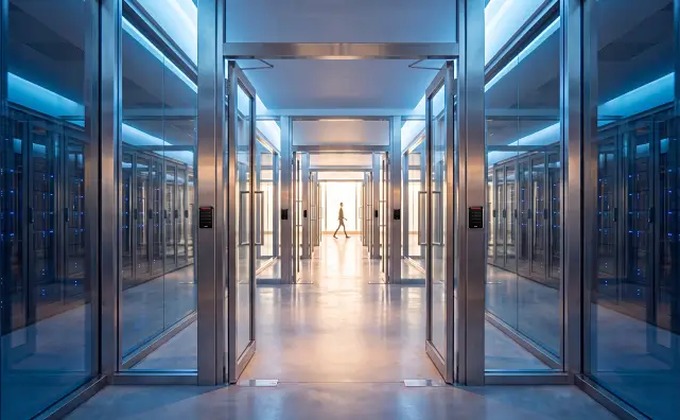
Data centers typically use security zones that become more restrictive from the perimeter to building entry and sensitive internal areas. Authentication requirements increase according to role and risk.
HID says this layered model is well established. The bigger issue is whether the underlying access control architecture can support new technologies, expansion and integration over the facility’s lifetime. Closed, single-vendor systems may create problems later if upgrades require proprietary hardware or large-scale replacement.
Open standards reduce lock-in
The company recommends open and interoperable architectures built around standards such as Open Supervised Device Protocol (OSDP).
Such an approach can allow operators to adopt new credential technologies, integrate access control with other building systems and replace individual components without redesigning the entire platform.
Layered access is the baseline for data centers, while open protocols, interoperability and long-term lifecycle support determine how easily systems can evolve.
The company also stresses the importance of long-term vendor support. Firmware updates, cybersecurity maintenance, migration support and engineering expertise can become increasingly important as facilities expand and technology changes.
HID says the objective is to avoid access control architectures that work well at launch but restrict future upgrades.
For data center operators, the long-term value of an access control platform therefore depends not only on readers and credentials, but also on interoperability, lifecycle support and the ability to integrate future technologies without wholesale replacement.