
GISEC 2026 closes on quantum and AI security
Quantum resilience, AI-enabled cybercrime and operational resilience shaped the final day of GISEC Global 2026 in Dubai.
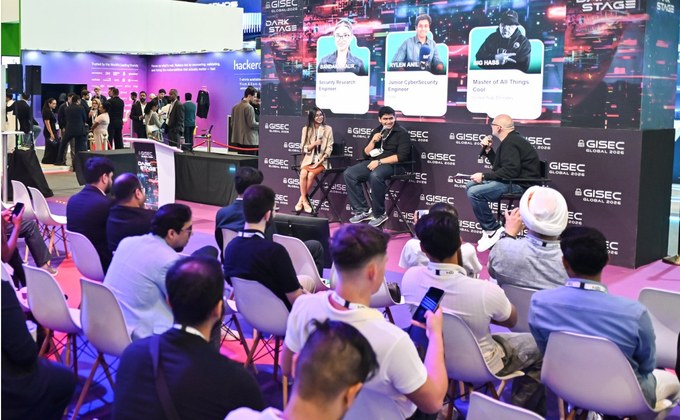
GISEC Global 2026 concluded its three-day conference program at Dubai Exhibition Centre on September 18. The final day focused on post-quantum security, AI-enabled cybercrime, operational resilience and emerging cyber talent.
Quantum readiness moves into focus
The Quantum Security Summit focused on practical preparation for post-quantum security.
Sessions covered post-quantum cryptography migration, UAE quantum resilience priorities and implementation across critical organizations. Experts from TII, ENEC and CPX also examined practical migration challenges.
Dr Saeed Aldhaheri, Chairman of the Robotics & Automation Society, said: “Quantum computing is bringing the need for post-quantum readiness into sharper focus. The UAE must begin migrating to quantum-safe cryptography now, strengthening crypto agility, national capabilities and talent to protect sensitive data before quantum threats become a practical reality.”
The program also included contributions from IBM, Google Cloud and international quantum and cybersecurity specialists.
Operational resilience under pressure
Critical infrastructure resilience moved into practical testing through Inside the Compromise: An OT Integrity Tabletop.
The two-hour exercise required participants to assess compromised operational technology systems and make decisions under pressure.
The session showed why critical infrastructure resilience depends on preparedness, coordination and rapid organizational decision-making.
Operational resilience
Critical-infrastructure resilience depends not only on technology, but also on preparedness, coordination and rapid organisational decision-making.
AI changes cybercrime and defense
Financial cybercrime also featured on the final-day agenda.
Yashasvi Yadav of Maharashtra State Cyber Department and Major Khalid Tahlak of Dubai Police examined an organized, cross-border and AI-enabled criminal ecosystem.
Speakers stressed the importance of acting quickly before stolen funds move across jurisdictions. They also discussed how law enforcement uses AI to analyze data, identify money-mule accounts and detect deepfakes.
“AI is a double-edged sword… whoever leverages the AI potential better would be the winner in this,” Yadav said.
Cyber sovereignty and human judgement
Speakers on the Critical Infrastructure Stage also examined cyber sovereignty in an interconnected world.
The discussion stressed that sovereignty does not necessarily require complete technological independence. It also highlighted regional cooperation and public-private partnerships.
AI remained a major theme throughout the day.
Prashant Haldankar, Managing Director and Group Chief Information Security Officer at Sekuro, said: “Attackers are already moving at machine speed, and that’s reshaping how we think about defense. At Sekuro, we’re exploring how AI can help our teams and our clients keep pace, while making sure human judgement stays at the center of every decision that matters. Events like GISEC are where we get to test that thinking against a global stage, learning from other regions while sharing what we’re building here in Australia.”
Next generation of cyber defenders
The final day also highlighted emerging cybersecurity talent.
Teenage cybersecurity specialists Bandana Kaur and Ryen Agil discussed their experience identifying vulnerabilities and developing technical skills early in their careers.
Women Defending the Digital World added another perspective on resilience. Aysha Ahmed BinHaji, Cybersecurity Advisor at Bahrain’s National Cyber Security Center, emphasized continuous testing, learning from incidents and practical resilience planning.
“We don’t focus on tasks. We focus on mission,” she said.