
World Police Summit tackles drug trafficking and AI
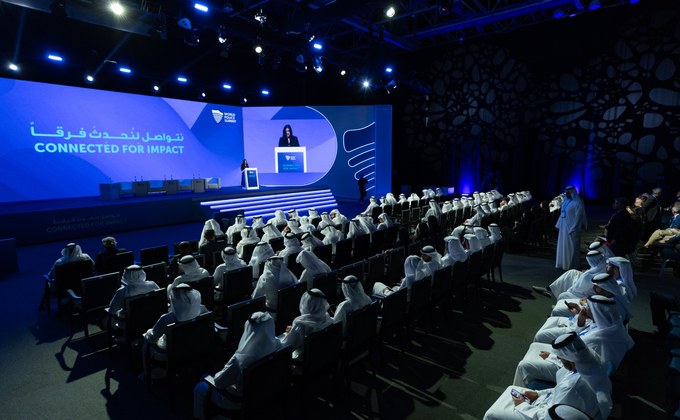
The World Police Summit 2026 hosted an international drug control conference in Dubai on November 17. The event focused on emerging drug threats, organised crime, artificial intelligence, and international law enforcement cooperation.
Sheikh Zayed bin Hamad bin Hamdan Al Nahyan, Chairman of the National Drug Enforcement Authority (NDEA), inaugurated the Drug Control Conference at the Dubai World Trade Centre. The conference formed part of the World Police Summit, held from November 16–18. Organised by NDEA and Dubai Police in cooperation with the summit, the conference brought together international experts and researchers. Representatives from the United Nations Office on Drugs and Crime (UNODC) and the European Union Drugs Agency (EUDA) also attended.
Discussions covered global drug trends, treatment and rehabilitation, international trafficking networks, and the health impacts of drug use. In addition, experts examined how AI can help combat organised criminal networks. The programme also addressed synthetic drugs and measures to prevent the misuse of chemicals used in their production. Experts examined approaches adopted by Australia and Colombia, while a dedicated workshop explored AI applications in drug-related case analysis.
AI and digital evidence in criminal investigations
The summit’s second day featured more than 60 sessions and panel discussions covering law enforcement challenges. Brigadier Saeed Al Hajri, Director of the General Department of Criminal Investigation at Dubai Police, delivered a keynote address on investigations and connected outcomes. The Police Investigations track examined how emerging technologies and international cooperation are transforming criminal investigations.
AI in Criminal Investigations
The summit examined how artificial intelligence can support digital forensics, trace digital footprints, investigate cryptocurrency transactions, and analyze drug-related cases.
Experts discussed forensic pathology, genomics, bioinformatics, and AI applications in criminal investigations. Other sessions explored digital forensics, tracing digital footprints, and investigating cryptocurrency transactions. A dedicated session, “Women in Forensics: Shaping the Future of Justice,” highlighted women’s contributions to forensic science.
Securing transport infrastructure
The Aviation, Rail, Road and Maritime Security track examined coordination between security agencies as transport networks become more interconnected. Discussions addressed aviation security, digital airspace protection, resilient railway networks, and threats from drones.
Experts also explored unmanned maritime systems and intelligent mobility solutions for future policing. Meanwhile, Dubai Police and the Roads and Transport Authority discussed the management of Metro and Tram operations during major events.
Child protection and emerging digital threats
Child protection was another major focus of the summit’s second day. A panel titled “Protecting Families in Complex Environments” examined cyberbullying, AI-related exploitation, and the need for stronger child protection systems.
The discussion highlighted findings from a survey involving more than 30,000 children. According to the findings, 66% believed cyberbullying had increased. Furthermore, one in two children did not know where to report abuse or seek support.
The panel also highlighted findings indicating that at least 1.2 million children had reported AI-generated sexually explicit deepfake videos involving their manipulated images over the previous year. Representatives from UNICEF, the Barnahus Network, the Council of Europe, and INTERPOL stressed the importance of coordinated responses. They called for stronger cooperation between police, healthcare professionals, schools, and social services.
The fifth World Police Summit concludes on November 18 with the World Police Summit Awards ceremony.