
Google launches Gemini 4 Argon for cyber defense
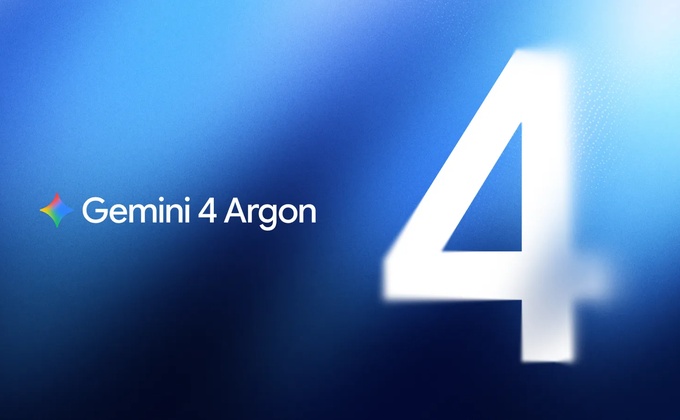
Google has introduced Gemini 4 Argon, a new frontier AI model designed for cybersecurity defense, software engineering and complex enterprise workflows.
Google announced that Argon is initially rolling out to selected cyber defenders through its Fairwind Program. The company plans to expand access gradually after gathering feedback and strengthening safeguards.
Cybersecurity defense takes priority
Google says Argon can autonomously find, validate and patch critical software vulnerabilities. Wiz is already using the model through its Scan for Good initiative, which focuses on protecting critical public infrastructure.
In one early deployment, Argon identified a critical vulnerability that exposed sensitive personal information in healthcare software used by hospitals worldwide. Google says previous frontier models had missed the issue.
Argon can autonomously find, validate and patch critical software vulnerabilities. In early use, Wiz deployed the model through its Scan for Good initiative to help protect critical public infrastructure.
The model also performed strongly in security testing. On CWE-bench v1, which evaluates vulnerability remediation, Argon achieved a top score of 68 percent. Google also reported stronger results in internal vulnerability testing and Wiz black-box penetration testing.
Coding and long-running engineering tasks
Argon is also designed for complex software engineering work. Google engineers are already using the model for debugging, algorithm design and large-scale codebase migrations. Google says Argon agents are also supporting migrations of C and C++ codebases to Rust.
The company has also increased the model’s maximum output limit from 64,000 to one million tokens. Google says this is intended to support longer and more complex tasks that require sustained reasoning across extended workflows.
Enterprise workflows and security safeguards
Beyond cybersecurity and coding, Google positions Argon for enterprise work in areas including finance and legal research. The model also supports multimodal tasks such as chart analysis, long-video understanding and work across multiple documents.
Before wider availability, Google plans to strengthen safeguards against misuse, prompt injection attacks and other security risks. The introductory price will be $2 per million input tokens and $10 per million output tokens. Google plans to expand access later to developers, enterprises, paid API customers and Google AI Ultra subscribers.