
GISEC 2026 explores AI-driven cyber operations and OT risk
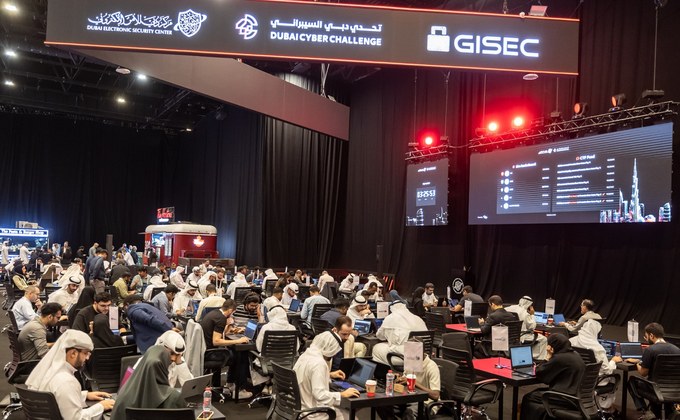
Critical infrastructure, AI-powered security operations and cyber conflict were central to the second day of GISEC Global 2026 in Dubai.
GISEC Global 2026 continued at Dubai Exhibition Centre under the theme Cyber First: The New Digital Order. Sessions examined how connected digital environments are changing national and industrial risk.
The UAE Cyber Security Council hosts the event. Dubai Electronic Security Center (DESC) participates as the official Government Cybersecurity Partner.
When cyber risk becomes operational risk
Day two opened with a focus on industrial control systems and operational technology.
Sessions examined vulnerabilities in human-machine interfaces, programmable logic controllers and safety systems. Experts also looked at how cyber incidents can create operational and physical consequences.
The discussion moved beyond traditional perimeter security. Instead, speakers emphasized risk-based resilience and the potential impact of cyber exposure on essential operations.
Digital twins provided another example. Demonstrations showed how manipulated sensor inputs, poisoned models and compromised data feeds can distort virtual representations of physical assets. These risks can affect energy, oil and gas and other critical sectors.
Cyber-physical risk
Manipulated sensor inputs, compromised data feeds and vulnerable OT systems can create operational and physical consequences.
DESC leaders also examined how Dubai is strengthening cyber resilience across its digital economy.
AI accelerates security operations
AI-powered security operations formed another major theme.
Sessions explored an AI-powered autonomous security operations center. The model combines telemetry, threat intelligence, automated triage and AI-guided response.
Another live scenario took participants inside a national OT SOC. Purpose-built agents reconstructed an intrusion moving from IT toward operational technology environments.
“As AI and agentic AI accelerate innovation, they are also expanding the scale and complexity of cyber risk. Organisations must secure AI agents with the same rigour applied to people and applications, while using AI-driven defence to keep pace with threats operating at machine speed,” said Fady Younes, Managing Director for Cybersecurity, Cisco METAC.
A hands-on workshop also examined enterprise AI agents. Topics included identity controls, runtime oversight, anomaly detection and autonomous containment.
Human oversight remains critical
The role of AI also raised questions about the cybersecurity workforce.
Alex Attumalil, Global Chief Information Security Officer at Under Armour, said recruitment alone cannot address the industry’s talent gap. AI can automate repetitive work, while security professionals focus on higher-value decisions.
“Human resources alone aren’t going to be enough. We will never be enough. Relying fully on human resources is not the way forward,” he said.
Cyber norms, trust and attribution also featured on day two. Government and cybersecurity leaders discussed their impact on international stability and global cyber governance.
GISEC Global 2026 continues on September 18 at Dubai Exhibition Centre with its final conference program.