
Prime Detect: Trained Operators, Not Just Equipment
By: Fouad Chehime | Business Development Manager
A bag arrives at a checkpoint. The officer swabs the handle but misses the zipper and seams. The test comes back clear, and the bag moves on. The detector performed. exactly as designed, but it could only analyse the sample the operator gave it. For governments and critical sites investing in detection technology, operator matters as much as equipment selection.
Why the operator decides the result
Modern trace detectors are easy to operate, but reliable results depend on how operators collect samples, handle consumables, and interpret. what they see. Four areas. make the difference.
Sampling. Explosive and narcotic residues sit where hands touch: handles, zippers, seams, buttons, and door frames. Knowing where to swab, how much pressure to apply and how much area to cover is the difference between collecting a trace and missing it.
Contamination control. Careless handling of test cards, gloves or samples can trigger false alarms or contaminate the next test. Trained operators keep consumables clean and follow the same routine every time.
Interpretation. An alarm is the start of a decision, not the end of one. Operators need to know what a result means, when to retest, when to escalate and when to confirm a finding with a second technology.
Safety and chain of custody. Unknown powders and liquids call for safe approach procedures, proper personal protection and documented handling, so that evidence and records hold up if a case goes further.
When any of these steps is weak, even the best detector gives unreliable answers. Unnecessary alarms waste time, money and trust. Missed threats can cost lives.
Two tools, two skill sets
PDI provides operator training for two DetectaChem systems that are often deployed together.
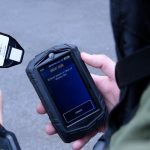
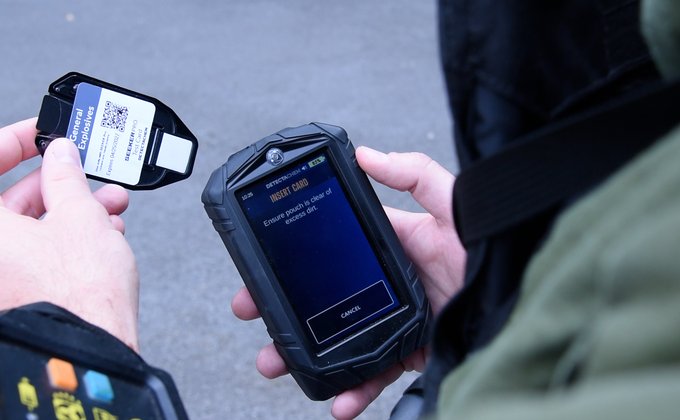
SEEKER Pro is a rugged handheld detector for explosives and narcotics. It uses swab test cards to screen trace, residue and bulk samples, and a single card can detect multiple threats at once. Operators learn correct sampling technique, test card handling and result interpretation.
APEX R7 is a palm-sized Raman spectrometer operating at 785 nm. It identifies unknown powders, liquids and solids in under 20 seconds, including through clear or translucent glass and plastic, and draws on a reference library of more than 24,000 substances. Operators learn scanning procedures, how to handle difficult samples and mixtures, and how to read results.
The two complement each other. SEEKER Pro screens for threats, including traces invisible to the eye. APEX R7 identifies the unknown substances you can see.
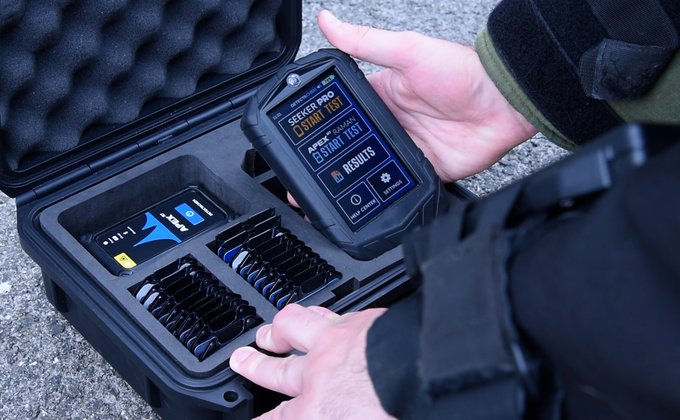
SEEKER APEX Combo Kit Case
What a certified training programme gives clients
PDI is authorised by DetectaChem as a certified trainer for SEEKER Pro and APEX R7. For government agencies and critical-site operators, that means:
- The manufacturer’s methods. Operators learn DetectaChem’s approved procedures rather than local workarounds.
- One standard across teams. Every operator, shift and site is trained to the same level, so screening stays consistent.
- Documented competence. Training records show who is qualified, supporting audits, inspections and internal compliance.
- Better return on equipment. Well-trained operators waste fewer test cards and trigger fewer false alarms.
- Local, ongoing support. As a Dubai-based partner, PDI delivers initial training, refresher sessions and onboarding for new staff across the region, alongside equipment servicing and technical support.
Detection equipment is a serious investment. But a detector is only as good as the swab, and the swab is only as good as the person taking it.
If your teams use SEEKER Pro or APEX R7, talk to us about certified operator or refresher training.