
Saudi Arabia Turns Security into Infrastructure
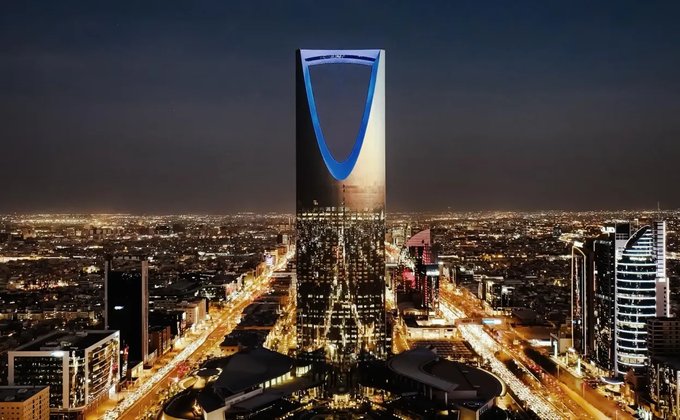
As Saudi Arabia builds transport networks, digital infrastructure, tourism destinations and critical facilities, security is becoming part of the underlying operational architecture. Physical protection, identity, data, connectivity and cybersecurity are being designed to work together, not as separate layers
By: Roman Ivanković E-mail: editorial@asmideast.com
Saudi Arabia is not just building cities. It is building the systems that will keep them running, with security as one of the most important factors. The Kingdom’s security market is growing alongside one of the world’s most ambitious economic and infrastructure transformations. But the scale of investment alone does not explain what makes this market so distinctive. The bigger change is happening in the role security plays within that transformation.
Security is moving beyond cameras, access control and individual protection systems. As Saudi Arabia builds transport networks, digital infrastructure, tourism destinations and critical facilities, security is becoming part of the underlying operational architecture. Physical protection, identity, data, connectivity and cybersecurity are being designed to work together, not as separate layers.
The scale of greenfield development reinforces this shift. Many of the assets that will shape the Saudi economy over the coming decades are still being designed or built. That creates an opportunity to integrate security from the start. It also raises expectations. Systems must be scalable, interoperable and reliable enough to support complex environments over long operational lifecycles.
The same pressure is changing technology demand. Video is moving from passive monitoring toward analytics and operational intelligence. Access control is becoming an identity issue. AI is increasingly judged by the operational value it creates. Special attention has been paid to the security of networks, power and digital infrastructure. At the same time, customers are placing greater emphasis on cybersecurity, compliance and local support.
Saudi Arabia is therefore not simply expanding an existing security market. It is creating a different kind of one. The opportunity lies in building security into the KSA’s wider physical and digital infrastructure, and in turning individual technologies into connected systems that can operate securely and intelligently at scale.
In this article, we examine how economic diversification and investment are driving this transition, where demand is emerging most strongly, how customer requirements are changing, and which technologies are best positioned for the next phase of the market.
Saudi Economy Moves Deeper into Diversification
Saudi Arabia entered 2026 after another year of strong economic growth. According to the IMF, real GDP expanded by 4.6% in 2025, while non-oil GDP grew by 4.2%. Three things kept the economy moving: stronger domestic demand, more private investment and consumption, and the gradual unwinding of OPEC+ production cuts.
The broader direction remains one of diversification. The latest Vision 2030 Annual Report shows that investment has become a much larger part of the economy. Its share in GDP increased from 22% to 30%, while investment in non-oil sectors reached USD 213 billion. The report also highlights the growing role of the private sector in driving economic activity.
However, this path is not a straight line. The IMF expects GDP growth to slow to 1.7% in 2026, with non-oil growth easing to 2.6%. The main reason is regional disruption, which has affected trade and confidence. However, the IMF expects activity to recover as conditions normalize. Over the medium term, consumption, investment, government-led projects and major international events should continue to support growth.
Government policy backs this transition. Saudi Arabia’s FY2026 Budget Statement confirms continued spending on Vision 2030 programs and development projects, with greater emphasis on private-sector investment and fiscal sustainability. The Ministry of Finance also identifies non-oil activity as the main driver of future economic growth.
This is important for the security industry. Saudi Arabia is not moving from one economic model to another in a single investment cycle. It is building new economic capacity while continuing to invest heavily in infrastructure. The result is a broad base of assets that will need protection, management and continuous modernization over long operational lifecycles.
Security Becomes Part of the Development Model
Saudi Arabia’s security market cannot be separated from the wider transformation of the economy. Vision 2030 is reshaping both physical and digital infrastructure, while large-scale development continues across transport, tourism, urban development and the digital economy. Security grows alongside the assets being created. It is not a separate industry on the side.
Security is increasingly designed into projects from the beginning rather than added after construction. This shifts attention from individual systems toward the resilience of the wider operating environment. Neyton Avila, Sr. Business Development Manager EMEA at Panduit Corporation, explained that Saudi Arabia is moving from standalone security systems toward connected, intelligent environments in which cybersecurity, physical security, connectivity and power must be designed as one resilient infrastructure. “Security is becoming an infrastructure question as much as a technology question,” he said.
This changes how the market should be viewed. Demand is no longer driven only by the number of cameras, readers or control systems being installed. More attention now goes to the architecture behind them, and to the infrastructure that keeps security systems connected, available and reliable over long operating cycles.
Greenfield Scale Changes the Rules
One of Saudi Arabia’s main structural advantages is the scale of greenfield development. Much of the infrastructure that will support future growth is being designed today. Owners and developers can build security, connectivity and resilience into the foundation, instead of retrofitting them later.
This creates an important advantage for lifecycle cost, maintainability and future technology adoption. In large developments, early design decisions determine how easily security systems can expand and adapt. They can also reduce the need for costly redesigns as new technologies and operational requirements emerge.
Government Strategy Shapes the Market
The state remains central to this development model. Government spending continues to support Vision 2030 programs and strategic capital projects, even as policymakers seek a stronger role for private investment. The 2026 budget keeps this balance, combining continued development spending with a stated focus on fiscal sustainability and diversification.
Government influence reaches beyond investment. As security systems become more connected, cybersecurity, data governance and regulatory compliance increasingly shape how systems are designed. This is especially true in government facilities and critical infrastructure, where security architecture must meet both operational and digital-security requirements.
The result is a market where international technology alone is not enough. Large projects increasingly require suppliers to meet local regulatory and operational requirements over long project lifecycles.
Procurement Is Becoming More Architecture-Led
These conditions are also changing procurement. Saudi customers increasingly evaluate technology within the context of long-term operational requirements rather than as isolated product purchases. This does not mean the market adopts new technology simply because it exists. Buyers want a clear operational case behind each investment. New capabilities are attractive when they improve visibility, support faster decision-making or solve a specific problem within a wider security environment.
Firas Al-Beiruti, Country Manager KSA at Milestone Systems, describes Saudi customers as well informed and technologically advanced. He also stresses that new technology needs a clear use case. “They are open to exploring new capabilities, especially when there is a clear business value and a strong use case behind the investment.”
This is an important sign of market maturity. Rapid adoption does not mean indiscriminate adoption. Customers increasingly expect technology to fit into a broader operational strategy and to remain useful as requirements evolve.
Saudi Arabia is therefore developing into a market where economic diversification, greenfield investment and more demanding procurement reinforce one another. The strongest solutions will likely be those that become part of the Kingdom’s wider operational infrastructure, rather than isolated security layers.
Development Pipeline Keeps Security Demand High
Saudi Arabia’s security market is being supported by an unusually broad development pipeline. Public Investment Fund of Saudi Arabia (PIF) invested nearly USD 200 billion in new projects in the Kingdom between 2021 and 2025. Its new 2026-2030 strategy continues this investment model, but with greater focus on building connected economic ecosystems rather than individual projects. Tourism, urban development, industry and logistics are among the areas expected to remain major investment priorities.
Giga-projects remain an important part of this pipeline. Developments such as NEOM, Qiddiya and Red Sea Global combine residential, commercial and public infrastructure at a scale rarely found in conventional projects. For the security industry, their importance lies not only in their size. These developments create complex operating environments that require security to work across multiple facilities and functions from the beginning.
Carlos Garcia, Sales Director, ASSA ABLOY Opening Solutions Middle East, sees this development cycle as one of the main forces behind market expansion. “Major giga-projects such as Qiddiya and The Red Sea Development have been key contributors to market expansion, creating demand for advanced security, access control, and safety solutions.”
The same investment logic extends beyond the giga-projects themselves. New transport infrastructure, public venues, hospitality developments and commercial assets all increase the number of locations that need long-term security management. This creates demand not only during construction, but throughout the operational life of these assets.
Digital Infrastructure Creates a New Security Layer
Another major driver is the rapid expansion of Saudi Arabia’s digital economy. AI infrastructure, cloud services and data centers are becoming increasingly important parts of the national investment agenda. PIF launched HUMAIN in 2025 as part of its push into artificial intelligence, while its new strategy identifies AI and advanced innovation among the areas expected to shape future investment.
This expansion creates a different type of physical security demand. Data centers concentrate high-value equipment, sensitive information and critical digital services in facilities where disruption can have consequences far beyond the site itself. Access therefore needs to be tightly controlled, identities verified and security events monitored continuously. Mohammed Murad, Chief Revenue Officer at Iris ID Systems, sees data centers as one of the clearest opportunities in the Saudi market. “Data centers are especially important as Saudi Arabia expands its cloud and AI infrastructure. As the value of the technology and information inside these facilities increases, the security around them also has to become stronger.”
The connection between physical and digital infrastructure is therefore becoming much tighter. Growth in AI does not generate demand only for computing capacity. It also raises the value of the assets being protected and increases the cost of downtime, unauthorized access or disruption.
Mobility, Tourism and Major Events Add Further Pressure
Saudi Arabia’s transformation is also increasing the movement of people across the Kingdom. Tourism has expanded rapidly, while new destinations and entertainment assets continue to open. The Vision 2030 Annual Report says tourism now contributes around 5% of GDP, with a target of 10% by 2030.
At the same time, transport networks and major-event infrastructure are being expanded to support this growth. Stadium developments, Expo 2030 Riyadh and preparations for the FIFA World Cup will add new venues and large visitor flows that require secure access, monitoring and coordinated incident response. PIF created the Expo 2030 Riyadh Company in 2025 to develop and operate the facilities for the event.
ASSA ABLOY’s Carlos Garcia expects this cycle to become an increasingly important driver of demand: “Looking ahead, we expect some of the strongest growth to come from major events and their supporting infrastructure, particularly stadium developments, Expo-related projects, and preparations for the FIFA World Cup.”
In Saudi Arabia security demand is being generated by the transformation of the economy itself, rather than by any single project or technology cycle
Taken together, these trends explain why security demand in Saudi Arabia is coming from several directions at once. Large physical developments are expanding the number and complexity of assets that need protection. Digital infrastructure is increasing their value and dependence on continuous operations. Tourism, mobility and major events are adding scale and operational pressure. The result is a market where security demand is being generated by the transformation of the economy itself, rather than by any single project or technology cycle.
Giga-Projects Create Security at Urban Scale
Saudi Arabia’s giga-projects are creating security requirements that go far beyond individual buildings. Qiddiya City is a good example. The development spans more than 360 square kilometers and combines residential areas with sports, entertainment and cultural venues. Its scale means security has to operate across a connected urban environment rather than through isolated systems.
This changes the operational challenge. Large mixed-use developments need to manage different types of users, access rights and risk levels within the same environment. Residents, employees, contractors and visitors may all move through overlapping spaces. Security therefore depends on centralized monitoring, consistent identity management and the ability to coordinate incidents across multiple sites.
Transport and Logistics Depend on Throughput
Transport infrastructure creates another set of operational pressures. Airports, ports and logistics facilities have to maintain security without slowing down movement. High volumes of passengers, vehicles and cargo make manual inspection increasingly difficult.
ISS recognized strong demand from transportation and critical infrastructure, particularly for vehicle inspection and perimeter protection. The company has also deployed its SecurOS Cargo platform at King Abdul Aziz Port, where automated container identification is used to support gate operations and improve visibility into cargo movements.
The challenge in these environments is therefore not simply detection. Security systems must identify risks while maintaining operational flow. This pushes demand toward automation, analytics and integrated command systems that can process information quickly and reduce delays.
Major Venues Bring Security and Operations Together
Sports, tourism and entertainment developments add a fourth operational model. Qiddiya’s planned Prince Mohammed bin Salman Stadium, for example, is designed for more than 46,000 football spectators and an overall capacity of more than 60,000 for other events. The venue is expected to host major international events, including matches during the 2034 FIFA World Cup.
Large venues have to manage highly variable traffic patterns. Security requirements change significantly between an ordinary operating day and a major event. Access control, crowd monitoring, incident response and perimeter management must all scale quickly while remaining coordinated with venue operations.
The same pattern is visible in tourism. Red Sea Global is developing large destination ecosystems that combine resorts, residences, airports and supporting infrastructure across a wide geographic area. The Red Sea destination alone covers 28,000 square kilometers and includes its own international airport.
These verticals differ in their operational priorities, but they point in the same direction. Saudi security demand is increasingly shaped by environments that are larger, more connected and more operationally complex. The next question is therefore not simply which technologies are being installed, but what customers now expect those technologies to do.
Operational Complexity Is Changing Customer Requirements
The operational pressures across Saudi Arabia’s major projects are changing how customers define value. Large developments must manage multiple sites and user groups. Transport and logistics require speed and continuity. Data centers need stronger identity assurance, while major venues must adapt to sharp changes in traffic and risk.
Firas Al-Beiruti of Milestone Systems sees this shift clearly: “Organizations are steadily focused on getting more value from their existing security investments by improving integration and making better use of available data.”
Customers want faster response, better visibility and more efficient use of existing systems. Technology is expected to reduce operational friction rather than simply add another layer of complexity.
The focus is therefore moving from equipment to outcomes. Customers increasingly expect technology to improve visibility, response and operational efficiency across the wider environment.
Integration Is Becoming the Starting Point
As security environments become more connected, interoperability is moving from a technical preference to a strategic requirement. Customers are dealing with multiple vendors, platforms and data sources. Closed systems make it harder to expand or adapt as requirements change.
Milestone notes that this is driving interest in open platforms. “Customers recognize that security environments are becoming complex, involving multiple technologies, vendors, and data sources. That requires flexibility to integrate different solutions and avoid being constrained by closed ecosystems,” said Firas Al-Beiruti.
The same trend is visible in identity and access control. Iris ID Systems’ Mohammed Murad says customers are no longer comparing individual devices in isolation. “They want to understand the complete architecture, how it will scale, and how it fits into their long-term security strategy.” This changes the role of access control, video and analytics. Each system still has a specific function, but customers increasingly expect them to work as parts of one operational environment.
Resilience Becomes a Core Requirement
As security systems become more connected, resilience becomes a core requirement. Customers need to know whether the underlying infrastructure can support more devices, greater bandwidth and future technology without major redesign. Panduit’s Neyton Avila puts the issue in operational terms: “Customers increasingly want to know whether today’s infrastructure can support higher bandwidth, more connected devices, higher PoE power levels, AI workloads, future wireless technologies and greater automation without requiring a complete redesign.”
Video Is Moving from Monitoring to Operational Intelligence
Video surveillance remains one of the core security technologies in Saudi Arabia, but its role is changing. Customers are looking beyond passive monitoring and recording. They increasingly expect video systems to help operators identify important events, prioritize risks and make faster decisions.
AI-powered analytics are central to this shift. They can reduce the amount of footage that operators need to monitor manually and help security teams focus on events that require attention. In large transport networks, public spaces and critical infrastructure, this can improve both situational awareness and response time. Firas Al-Beiruti describes the change as a move toward more proactive security environments. “The focus is shifting towards using technology to enhance efficiency, support smarter decision-making, and create more proactive security environments.”
Raheel Jalili of ISS sees a similar trend. “One of the fastest-growing requirements is AI-driven automation, enabling organizations to detect threats in real time, reduce false alarms, and improve operational efficiency,” Jalili said.
The result is a broader change in the role of video. Cameras are becoming sources of operational data, while video management platforms increasingly serve as the layer that connects analytics, incident management and other security systems.
Access Control Is Becoming an Identity Question
Access control is undergoing an equally important transformation. Traditional systems were built around credentials: a card, PIN or other token determined whether a person could enter a restricted area. Increasingly, customers want stronger assurance that the credential is being used by the right person.
This creates greater interest in biometrics and more advanced identity authentication. The issue is particularly important in government, data centers and other high-security environments, where access decisions must be both reliable and auditable. Mohammed Murad of Iris ID Systems puts the change clearly: “Traditionally, access control focused on the credential, do you have the correct card or PIN? Today, customers increasingly want to know whether the person using that credential is the actual authorized individual.”
The technology requirements are evolving with this change. Customers are paying more attention to biometric spoofing, privacy, encryption and secure communications. Murad also expects growing interest in multimodal biometrics and stronger Presentation Attack Detection as threats such as synthetic identities and deepfakes become more sophisticated.
Platforms Are Replacing Isolated Systems
Another major shift is architectural. Video, identity and access control are increasingly expected to operate as parts of a connected security environment rather than as separate technologies.
Intelligent Security Systems – ISS, a leading provider of video intelligence and data awareness software, sees strong demand for unified platforms that combine video management, analytics, facial recognition, vehicle inspection and command-and-control capabilities. The objective is not integration for its own sake. A common platform can give operators a more complete view of events and reduce the time needed to move between separate systems.
Cloud and hybrid architectures are adding another layer of flexibility. Milestone notes that customers are evaluating cloud technology for scalability, centralized management and operational flexibility. At the same time, deployment models vary according to sector and regulatory requirements. The same consideration applies particularly to sensitive environments. Mohammed Murad says he expects government and critical infrastructure operators to continue using combinations of cloud, private cloud, hybrid and on-premises systems, depending on cybersecurity and data-governance requirements.
Infrastructure Becomes Part of the Security Technology Stack
Panduit’s Neyton Avila points to higher-power Power over Ethernet (PoE), extended-reach connectivity and resilient power architectures as increasingly relevant to security deployments. The basic principle is simple: connected security systems can only operate if the infrastructure beneath them remains available.
“Cameras, access-control devices, wireless access points, sensors and smart-building endpoints increasingly receive both data and power through the network. As device density and power requirements rise, the quality of the cabling architecture becomes more important,” he said.
Cameras are becoming intelligent sensors. Access control is moving toward identity assurance. Individual products are becoming parts of larger platforms. And the network and power infrastructure behind those platforms is becoming part of the security architecture itself.
These changes show that technology transformation is taking place at several levels at once. Video is becoming more intelligent, identity assurance is becoming stronger, and the infrastructure supporting security systems is becoming more important.
For Avila, this is the next stage of the market: “We already know how to connect everything. The next challenge is how to protect, identify, power and operate everything securely at scale.”
Reliability and Lifecycle Value Shape Decisions
Once technical requirements are met, project decisions increasingly come down to reliability, maintainability and long-term performance. Price still matters, but the scale and operating life of many Saudi developments make lifecycle value especially important. ASSA ABLOY’s Carlos Garcia notes that Saudi customers often have more demanding specifications because of the size and complexity of projects. “Compared to other GCC markets, customers in Saudi Arabia often have more demanding specification requirements due to the nature and scale of the projects being developed.”
Systems that are difficult to maintain, expand or adapt can generate significant costs long after installation. For large developments, proven performance and the ability to avoid major redesigns therefore become part of the value proposition. Neyton Avila from Panduit Corporation notes that customer conversations are moving from product selection toward “architecture, lifecycle performance and operational resilience.”
Local Support as a Key Market Differentiator
Technology performance alone is also not enough. Large Saudi projects often involve strict technical requirements, long implementation cycles and significant operational risk. This raises the importance of local support, technical expertise and the ability to respond after deployment. ISS’ Raheel Jalili identifies this as one of the main differences between Saudi Arabia and other GCC markets. “Saudi Arabia typically has larger-scale projects, more rigorous technical and compliance requirements, and a stronger emphasis on proven technologies with local support capabilities.”
Compliance requirements increasingly extend beyond physical system performance to cybersecurity and data governance. For government and critical infrastructure projects, vendors must therefore address these requirements from the design stage rather than treat them as later additions. Partnerships therefore become part of project delivery. Vendors need local integration capabilities and long-term technical support, while customers need confidence that systems will remain operational and compliant after installation.
The strongest position in the Saudi market is therefore not created by one product feature or technology trend. It comes from combining integration, reliability, lifecycle value, compliance and local support within a solution that can perform over time. In a market defined by large and complex projects, execution capability is becoming as important as technological sophistication.
“Saudi Arabia typically has larger-scale projects, more rigorous technical and compliance requirements, and a stronger emphasis on proven technologies with local support capabilities.”
– Raheel Jalili, Country Director KSA & Bahrain, ISS
From Security Systems to Operational Ecosystems
The next phase of the Saudi market will be shaped less by the number of systems deployed and more by the value created from connecting them.
Firas Al-Beiruti expects this shift to continue: “The Saudi market is expected to advance from a traditional security-focused environment into a broader ecosystem driven by data, intelligence, and measurable operational outcomes.”
Customers will increasingly look at how technology improves decision-making, reduces operational friction and creates value beyond basic protection. The strongest platforms will be those that can connect data from different systems and turn it into usable information.
Raheel Jalili likewise expects demand for intelligent platforms to accelerate as Saudi Arabia continues investing in digital infrastructure and AI. “We expect demand for intelligent, platform-based security solutions to accelerate across both government and private sectors, making the Kingdom one of the most dynamic security markets globally.”
Future investment will therefore be judged increasingly by measurable operational outcomes rather than technology deployment alone.
AI Growth Will Depend on Real Operational Value
Artificial intelligence will remain an important technology driver, but the market is likely to become more selective about where it creates measurable value. The focus will increasingly shift from AI as a feature toward applications that solve clear operational problems.
Its impact will also extend beyond analytics. Greater use of AI means more computing capacity, more data centers and stronger dependence on resilient networks and power. Neyton Avila expects some of the strongest opportunities to emerge around AI and hyperscale data centers, intelligent buildings and integrated security environments.
Identity Will Become a Stronger Security Layer
Identity is also likely to become more central to future security architecture. As physical and digital systems converge, organizations need stronger assurance about who is accessing sensitive environments and whether that identity can be trusted.
Mohammed Murad of Iris ID Systems expects Saudi Arabia to continue moving from individual security products toward integrated identity and security ecosystems. “The biggest change, however, may be very simple. For years, access control asked: ‘Do you have the right credential?’ The next generation of security will ask: ‘Can I confidently establish that you are the person you claim to be?’”
This will support further adoption of biometrics, multimodal authentication and stronger protection against identity-based threats. At the same time, deployment models will remain mixed. Cloud adoption is expected to grow, while government and critical infrastructure will continue to combine cloud, private cloud, hybrid and on-premises systems according to cybersecurity and data-governance requirements.
Scale Will Keep Raising the Bar
The market’s future will also be shaped by the scale of Saudi development. New infrastructure, major events, data centers and urban projects will continue to create demand for systems that can operate across large and complex environments.
ASSA ABLOY’s Carlos Garcia expects particularly strong opportunities in stadiums, healthcare and data centers, with continued growth in biometric authentication, smart access control and critical infrastructure protection.
The direction is therefore becoming clearer. Saudi Arabia’s security market is moving toward greater convergence, stronger identity assurance and more intelligence at the platform level. AI will continue to expand, but operational value will matter more than novelty. At the same time, the infrastructure beneath these systems will become more important as projects grow in scale.
The next stage of the market will not be defined simply by how much technology is deployed. It will be defined by how well that technology can operate securely, intelligently and reliably as part of a larger system.
Saudi Security Moves from Systems to Infrastructure
Saudi Arabia’s security market is entering a phase where scale alone will no longer be the defining factor. The next few years will be shaped by how effectively the Kingdom can turn rapid infrastructure growth into secure, connected and resilient operational environments.
That will place greater value on integration, identity assurance, AI-driven intelligence and the infrastructure that supports them. Customers will continue to adopt new technologies, but the strongest demand will come from solutions that can operate reliably across large and complex environments, adapt over time and support clear operational outcomes.
For vendors and integrators, this changes the nature of the opportunity. Success will depend less on supplying individual technologies and more on combining proven performance, interoperability, cybersecurity and local support within systems capable of scaling with the Kingdom’s development.