
AI-driven HVAC market set to reach $6.7bn by 2031
The global HVAC optimization software market is expected to grow from $4.6 billion in 2026 to $6.7 billion by 2031, as artificial intelligence increasingly moves building controls from monitoring toward automated operation.
According to Memoori, the market has grown from $4.2 billion in 2025 and is forecast to expand at a compound annual growth rate of about 8.1%. The research covers 126 companies providing HVAC optimization software across offices, retail, data centers, hospitality, venues, warehouses and mixed-use buildings.
Data centers emerge as major HVAC software market
Data centers account for 12.3% of HVAC optimization software revenue in 2026, substantially more than their share of commercial building floor space. Memoori links this demand to cooling requirements that closely follow IT loads. Data center electricity demand increased 17% in 2025, according to IEA figures cited in the report. The research identifies colocation and enterprise data centers as a particularly significant opportunity, rather than hyperscale facilities.
Data centers account for 12.3% of HVAC optimization software revenue in 2026.
AI shifts building controls toward autonomy
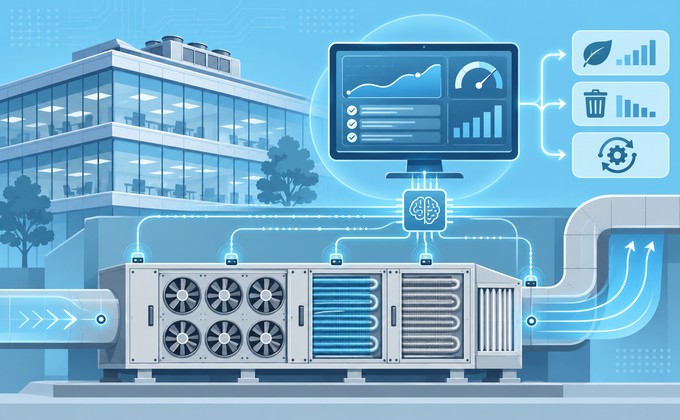
HVAC optimization platforms increasingly combine artificial intelligence, IoT data and analytical models to monitor performance, identify faults and recommend operational changes. More advanced systems can also adjust equipment automatically.
Software can combine inputs from building controls, energy meters, weather, occupancy and tariffs. These data are analyzed using rules, physics-based models, AI or combinations of those approaches. Where automated control is enabled, the software can send commands directly to building controls within predefined limits. Operational results then feed back into subsequent decisions.
Memoori says market growth is being driven by energy costs, regulation of building controls, sustainability reporting and green finance. Deployment remains constrained by integration with legacy control systems, skills shortages and divided incentives between building owners and tenants.
Building technology groups acquire AI specialists
The shift toward autonomous optimization is also driving investment and consolidation. Trane Technologies has acquired BrainBox AI, while Johnson Controls bought Nantum AI and Webeasy. Carrier acquired 75F, ABB acquired Eliona’s platform, and Copeland agreed to acquire Bueno Analytics.
Memoori also tracked 29 funding deals between October 2024 and October 2026. Among the largest were PassiveLogic at $74 million, Runwise at $55 million and Phaidra at more than $50 million. Around three-quarters of the 126 vendors tracked by Memoori employ 250 people or fewer, while 21 have more than 10,000 employees. The research firm expects further partnerships and acquisitions as larger building technology groups expand their AI and automation capabilities.